WHEN ASKED WHO IMPRESSED YOU MOST IN 2007?
Published on December 27, 2007 in Metro Eireann
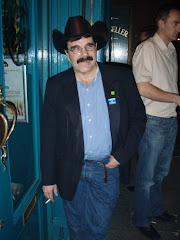
The World at Home section’s featured columnist CHARLES LAFFITEAU responded:
“Barack Obama, because I truly believe he is the one person who can unify America and end its decades-long civil war over culture, gender, race and religious differences at a time when the world needs America’s leadership most. On America’s role in the world Obama says that: “We can and should lead the world, but we have to apply wisdom and judgement.”
Saturday, December 29, 2007


Sunday, December 16, 2007
Only 2 more weeks till the Iowa caucuses
Republican Politics, American Style
Published on December 20th 2007 in Metro Eireann By Charles Laffiteau
With just two weeks to go until the Iowa caucuses and the beginning of the last leg of the US Presidential nomination process, I will now attempt to provide the indepth and unbiased analysis of the average US citizen’s views on various different social issues and the current political standing of the Presidential candidates of both the Repunlican and Democratic parties that I promised you in my last column.
I should note that the key US Presidential primary dates have all been moved forward in the past six months as different states jockey for a position of national influence regarding the eventual Presidential nominees by being among the first to allow their voters to cast ballots for them. In so doing, some of these states also risk losing half or all of the number of convention delegates allotted by the Republican and Democratic Parties to them. These states are betting that the national parties will not follow through with these threats, but if they are wrong in this assessment then they will have a reduced or no role at the national nominating conventions.
The candidates who win these primaries will then be left with nothing more than some newspaper headlines to show for their victories, since half or all of these state’s actual delegate votes won’t be counted as part of the political parties’ Presidential nomination process. Personally, I hope both parties follow through on their threats because such actions by individual states to draw more attention to themselves throws the entire nominating process into chaos.
As things currently stand though, it appears that Iowa will once again kick off the race for national convention delegates with the first in the nation state party caucuses on Thursday January 3rd, 2008. The Iowa caucuses will then be followed by the New Hampshire state primary five days later on Tuesday January 8th 2008. Both of these dates are the earliest ever for Presidential nomination voting.
The Michigan primary has been moved up to Tuesday, January 15th along with the Florida primary two weeks later on January 29th but all of the Democratic candidates have refused to campaign in either state and none of their Republican counterparts have made any moves in that direction either. The Republican Party has slashed the number of delegate votes from all of these states in half for holding their primaries before February 5th and the Democratic Party has said it will bar delegates from these states from voting at their national convention. Well, so much for these states trying to trying to influence the national Presidential nominating process.
The biggest Presidential primary voting date will once again be on February 3rd 2008, the so called “Super Tuesday” national primary for both parties, when voters in twenty one states will go to the polls to elect almost half of the nation’s presidential nominating delegates. Super Tuesday separates the Presidential contenders from the pretenders and the leading vote getter coming out of this group of primaries will be the odds on favourite to capture their respective party’s nomination for US President.
Even though the number of delegate votes at stake in the Iowa caucuses and New Hampshire primaries is very small, many past Presidential party nominations have been decided based on surprising or disappointing showings in these early voting states. It is for that reason all of the Democratic and Republican nominees have been spending the vast majority of their time and television advertising dollars on their respective Presidential political campaigns in these states.
In 2004 John Kerry emerged as the surprise winner of the Iowa caucuses, while frontrunner Howard Dean ran a disappointing third, leading to Dean’s demise and Kerry’s eventual triumph as the Democratic Presidential nominee. In 1992 Massachusetts’ US Senator Paul Tsongas defeated little known Arkansas Governor Bill Clinton 33.2% to 24.8%, but Clinton’s strong showing surprised most political observers and thus gave him the momentum he needed to win the Democratic Party’s Presidential nomination. So where do the current Presidential candidates stand in these two early presidential voting states?
Well, in Iowa the frontrunner among Iowa voters for the past year, Republican Mitt Romney, is now in a virtual dead heat with former Arkansas Governor Mike Huckabee, despite a huge advantage in terms of campaign resources, staff, TV advertising as well as time and money spent in the state over the past year. Huckabee has surged past better known and financed Republican rivals such as Rudy Giuliani, “Law and Order” TV star Fred Thompson and Senator John McCain and is now poised for an upset win in the Republican caucuses.
Huckabee is a very likable candidate who has handled himself well in debates with his better known rivals and enjoys the support of a majority of socially conservative Republican voters. A win in Iowa or a strong second place showing there may give Huckabee just the momentum he needs to duplicate what another former Arkansas Governor did in New Hampshire sixteen years ago, which eventually led to Bill Clinton capturing the Democratic Party’s 1992 Presidential nomination.
On the Democratic side, Hillary Clinton has also lost her front running position in Iowa and is now in a statistical tie with her two main Democratic rivals, Barack Obama and Senator John Edwards less than two weeks before this contest is decided. The news isn’t any better for Romney and Clinton in New Hampshire where both have seen double digit percentage point leads over second place rivals, John McCain and Barack Obama, evaporate. Both Clinton and Giuliani (because of Huckabee) have also witnessed additional erosion of their leads in national polls.
Nationally, Romney is fighting the perception that he isn’t as trustworthy as other candidates like Huckabee, because of his flip-flops on social issues like abortion and gay marriage. Clinton is likewise grappling with the public’s perception that she says what voters want to hear, not what she believes. So from my perspective, a loss or close win in these early contests could sink their Presidential campaigns.
A Republican's analysis of Democratic candidate' campaigns
Republican Politics, American Style
Published on December 13th 2007 in Metro Eireann By Charles Laffiteau
I closed last week’s column with some comments related to the lack of propriety in American politics, alluding to Republican conservatives disseminating rumours that Barack Obama is secretly a Muslim and not a Christian, with at least one of them claiming his source was Hillary Clinton’s campaign. That opens the door for me to discuss the Democratic candidates for President and analyze their campaign tactics and issues of importance to them and other American citizens.
Before I begin I think it would be prudent of me to remind readers that I came out in support of Senator Barack Obama for both the Democratic nomination and the US Presidency at the beginning of this year, in spite of the fact that I am and will continue to be a lifelong member of the Republican Party. That I’m doing so shouldn’t be that surprising since Ronald Regan had a group called “Democrats for Regan” supporting him in 1980 and 1984. You may want to take my observations about the Democratic race with a grain of salt though, since I’m analyzing the candidate I support as well as those he is running against.
To begin where I left off last week, I initially found the editor of Insight’s claim that the source of the rumour was the Clinton campaign to be self-serving since they would love to tarnish her campaign for the Presidential nomination. But it now turns out that Judy Rose, the Jones County Iowa Clinton campaign chairwoman, was indeed circulating an e-mail message falsely stating that Senator Barack Obama was Muslim and was running for president as a “Manchurian candidate”. Clinton’s campaign denies any knowledge or involvement in Jones activities, but one still can’t help but wonder.
While illegal immigration is the top national issue for a majority of Republicans, Democrats see the top three issues as the war in Iraq, health care and the economy. My own sense is that these same three issues are the ones of most concern to the majority of American voters regardless of their political affiliation. The Iraq war is also of concern for most Republicans, but they see it as an essential part of the war on terror which is why all but one of the Republican candidates supports President Bush’s determination to continue to prosecute the war.
But unfortunately for the Republican candidates, between two thirds and three quarters of American voters believe this war was a colossal mistake and should have never been undertaken by President Bush. Thus I would expect that whoever the eventual Republican nominee is, he will immediately begin to soften his support for maintaining the status quo in Iraq once he has been nominated, lest he risk alienating a majority of the independent voters he will need the support of to win the November 2008 general election.
In a similar vein Hillary Clinton has already changed her stance on the politically explosive issue of illegal immigration, saying that she no longer supports the idea of giving illegal immigrants drivers’ licences for identification and crime reporting purposes. Mrs. Clinton’s statement that “As president, I will not support driver’s licenses for undocumented people and will press for comprehensive immigration reform that deals with all of the issues around illegal immigration, including border security and fixing our broken system.” is much closer to Republican positions on the issue than the sentiments of most Democrats and is an indication that she is looking ahead to the general election.
Mrs. Clinton says her strengths on security and foreign policy issues are due to her previous White House experiences and this is why she would be a stronger US commander in chief than her Democratic rivals. While Hillary did travel the world and meet heads of state as First Lady, her judgement remains suspect in my mind because of her vote to authorize the Iraq war, which was the politically popular thing to do in the wake of the 9/11 attacks.
This is also one of several reasons why polls in Iowa and nationwide suggest that many voters see Mrs. Clinton as calculating and more likely to say what she thinks a majority of American voters want to hear rather than what she really believes. Another reason is that without explicitly appealing to women to vote for her because she is a woman, Hillary frequently talks about what other women tell her about the importance of her candidacy as a woman. Hillary also makes frequent references to “the all-boys club of presidential politics” and is prone to using language that evokes gender stereotypes. I see this as a subtle but effective appeal to women to vote for her because she is a woman, despite her denials that she is playing the gender card.
In contrast to Mrs. Clinton, Senator Obama has assiduously avoided playing the race card in his appearances before predominately African-American voters, instead striking the same theme that he does with predominately white or Hispanic audiences, that he is a multicultural candidate with a unique ability to bring people together and break from the status quo. Not surprisingly Obama is also running behind Mrs. Clinton when it comes to endorsements from African-American politicians, endorsements that Mrs. Clinton courts but that Mr. Obama refuses to ask for. In his appeals to women voters, Mr. Obama likewise presents himself as particularly sensitized and equally committed to women’s issues because he was raised by a single mother. Obama also showed good judgement and political courage in his principled stand against the Iraq war and in his decision to support immigration reforms like issuing drivers licences to illegal immigrants.
These are the main reasons why Barack Obama appeals to me as a refreshingly honest Presidential candidate and Hillary Clinton does not. Thus Obama’s statement that “I believe I can bring the country together and overcome the special interests.” summarises his campaign’s theme; that he will be an agent of change as President, representing the interests of all Americans regardless of race, gender or ethnicity.
.
Republican YouTube debate?
Republican Politics, American Style
Published on December 6th 2007 in Metro Eireann By Charles Laffiteau
I watched the Republican Presidential candidates’ debate on CNN while I was in Berlin last week and so today I want to discuss what I saw and heard as well as a few candidate insights and some recent examples of what I meant when I wrote of the growing lack of propriety in US political campaigns.
The debates were organized by CNN based on questions posed by ordinary American citizens of all ages, ethnicities and religious or political persuasions that were video-recorded on YouTube. Each of the 8 candidates was also allowed to record their own 30 second YouTube political ads which were played at various points throughout this 2 hour long so-called debate.
I say so-called, because in a true debate, each candidate gives a timed response to the same question and then is allowed some additional time later for rebuttal. Such was not the case here, since only one to three candidates was asked to respond to each question and rebuttal time varied from none to as often as three times depending on the issue. Still in all, CNN debate moderator Anderson Cooper did a fairly good job of spreading the questions around and following up when candidates tried to avoid answering the question (as so many politicians are famous for doing).
Predictably, the dominant issue in this debate, and the one that drew the most fireworks, was illegal immigration. Are you surprised it wasn’t the Iraq war? Well don’t be, because a shrinking majority of Republican voters still support Dubya and buy into the President’s argument that the Iraq war is ground-zero in Bush’s global “war on terror”. As such, only a single GOP candidate is against the war and that candidate, maverick libertarian Ron Paul, has no chance at winning the Republican nomination.
In fact the only question that was asked about the Iraq war came towards the end of the debate when a questioner asked whether the candidates felt that the US should maintain a “permanent” military presence in Iraq in order to protect the nation from Islamic extremists. Nor were the responses from the candidates to this question surprising either. Fred Thompson said the US should stay in Iraq for as long as it takes as did anti-immigration demagogue Tom Tancredo.
When Ron Paul said that he would pull US troops out and turn the country over to Iraqi political leaders, he justified his position by rightly pointing out that there wasn’t nearly as much violence in Kurdish controlled Northern Iraq or in Southern Iraq since the British had basically withdrawn and been replaced by Muqtada al Sadr’s Shiite militias there.
Senator McCain then responded sharply to Ron Paul accusing him of being an isolationist and harkening back to his days as a Vietnam POW, saying the US never lost a battle in Vietnam but had been forced to leave the job undone because American public opinion had turned against the war. McCain then went on to say that we can’t afford to repeat this mistake again in Iraq to a resounding round of applause.
But the first four and largest number of questions dealt with illegal immigration and what the candidates would do to stop it. I happen to believe this has become the Republican Party faithful’s hot button issue because the President and my party have performed so dismally in all other areas, that immigration is the only issue left they can get self-righteously indignant about.
I will write a column later which will delve into this issue in more detail, but suffice to say that all of the candidates espoused the “no amnesty” and “let’s build a bigger fence to keep them out” approach. John McCain was the only one who even attempted to point out that these so-called solutions still don’t address the issue of what do we do about the estimated 12 – 15 million illegal immigrants already residing in the US. Are we supposed to believe that we can arrest and deport them all?
On questions about the huge deficits that Bush and the Republican led Congress have run up since 2001 and the 40% increase in spending on areas other than Social Security and Medicare, all of the candidates beat the same drums, saying that they would veto pork barrel spending measures and impose across the board spending cuts and or eliminate Departments like Education and Energy. Give me a break!
On questions like abortion and gun control only Giuliani took a position supporting the status quo while the others voiced support for anti-abortion laws and US citizen’s 2nd amendment rights to bear arms. In response to a question about the death penalty stated as “What would Jesus do?” Mike Huckabee gave the best response saying that “Jesus was too smart to run for public office”. Yet he and all the other candidates claimed that they regarded its use as a difficult but appropriate means of punishment for certain crimes.
While there was nothing new or unexpected in the candidates’ views on these and a number of other issues, Fred Thompson’s campaign ad attacked Romney for his flip flopping on issues like abortion and Huckabee on raising taxes. I think this showed how desperate Thompson has become since he trails them in Iowa and New Hampshire. By contrast, the other candidates’ ads either attacked Hillary Clinton or burnished their credentials as “true conservatives”. What a waste of my time watching this debate was.
While most of the Republicans have been attacking Hillary regularly in their ads, Barack Obama has been subjected to patently false claims by conservative magazines like Insight and Human Events that he is actually a Muslim and not a Christian. These false rumours have also been picked up and passed along by conservative talk show hosts like Michael Savage. Even more interesting is the editor of Insight’s claim that the source of the rumour was the Hillary Clinton campaign. Clinton denies this and for her sake I hope her campaign’s being honest about this.
What does the average American voter think?
Republican Politics, American Style
Published on November 29th 2007 in Metro Eireann By Charles Laffiteau
As I was winging my way back across the Atlantic Ocean to my home (yes home is Ireland now), I reflected a bit on what I had experienced for the last 2 and a ½ months while I had been back in my former home of the United States of America.
The issues which seemed to have weighed most heavily on my mind were those involving the environmental effects of global warming, the upcoming US Presidential and Congressional election landscape and the heightened debate about how to deal with illegal immigration. I will now endeavour to compose my thoughts on where the sentiments of US citizens stand on these matters and discuss them in my remaining columns for 2007.
If it is sometimes difficult for me to gauge the true sentiments of most Americans on any number of political issues, then I think it must be extremely hard for those outside of the United States to understand how the average American thinks. Most people living outside of the US are much more limited in terms of their exposure to how the average US citizen thinks and reacts to politically divisive topics, so maybe it would be helpful to frame my discussions of where I think America is headed by first discussing how we have evolved as a society politically.
Unlike most other democracies in the world and particularly in the EU, the US political system is rooted in the two party system of political governance. Third party candidates for President or other state and federal political offices have, with only a few exceptions, never been successful in being elected to positions of political power. The reasons for this are many and complex, but in general this is a reflection of a kind of innate social and political conservatism on the part of American society as a whole.
This attitude is reflected in the fact that there are significant overlaps in the respective political positions of most members of the two long dominant Democratic and Republican political parties. Therefore, as compared to political parties in most of the other democracies around the world, these two US political parties are both essentially centrist in nature. The results of US Presidential elections over the past fifty years reflect these overlaps because they have always been fairly close in terms of both the popular and state electoral vote totals of the respective candidates.
The only two exceptions were the Presidential elections of 1964 and 1972 which occurred at the beginning and at the end of the Vietnam War and a period of great social upheaval in both the US and the rest of the world. In 1964 the Republican Party nominated a very politically conservative candidate, Barry Goldwater, and paid for this departure from previous nominations of more centrist Presidential candidates by losing the1964 Presidential contest in an electoral landslide to incumbent Democratic President Lyndon Johnson. Goldwater lost in an avalanche, winning the popular and electoral vote in only his home state of Arizona and five other southern states, largely because American voters thought Goldwater’s hardline foreign policy positions would bring about a deadly nuclear confrontation with the Soviet Union.
The Democratic Party however, did not heed the lessons learned by the Republican Party’s debilitating loss of the 1964 Presidential election. In 1972, Democrats nominated a very politically liberal anti-Vietnam War candidate, George McGovern, to run against incumbent US President Richard Nixon. Despite the rising unpopularity of the Vietnam War (and not due to Republican “dirty tricks”), President Nixon was re-elected in another avalanche by the second largest popular and electoral vote total in US Presidential election history. McGovern lost the popular vote by a 60 to 38% margin, failed to carry even his home state of South Dakota and won the electoral votes of only the state of Massachusettes and the District of Columbia.
Thus the elctions of 1964 and 1972 further cemented the idea that political elections in the US are won or lost based on the political views of the moderate center of the American voter electorate, rather than the political perspectives of the more activist conservative Republican or liberal Democratic Party members. But in more recent years I have detected a subtle but nonetheless discernible evolution in the American political landscape. I believe that much of this change has been due to the growing influence of the US electronic news media at the expense of the more traditional printed news sources.
The political positions of many elected officials from both parties (on a number of issues) have become decidedly more polarized in recent years. There is also much less propriety in terms of the way in which elections are contested by both Republican and Democratic Party candidates. My own sense is that the average American citizen is way out ahead of most US politicians (and much more moderate) in his or her views on issues such as health care, education, environment and foreign policy.
But you wouldn’t know this because the US news media, particularly the electronic versions, primarily focuses on the differences between the perspectives of various members of the “political classes” rather than the views of average American citizens. I say this with all due respect for both the news media and the political classes, because I consider myself to be a member of both. But the news media in the US and much of the rest of the world is now dominated by private business corporations which are motivated and driven by a desire to sell advertising and derive greater profits from the viewer ratings and or purchases of their news products.
Unfortunately, it is much easier to attract viewers’ and readers’ attention if you focus on controversial or attention grabbing “sound bites” and differences in political opinions, than it is to provide those consumers with an indepth and unbiased analysis of various different social issues and political positions. I will nonethelass attempt to provide readers with this kind of analysis in my future 2007 newscolumns.
My Fall road trip thru the South
Republican Politics, American Style
Published on November 22nd 2007 in Metro Eireann By Charles Laffiteau
Today I will depart from my usual discussion of US politics and talk about my road trip through the Deep South last month.
At the beginning of October I began my first road trip (following my last graduate school class of the week) on a hot and muggy Thursday evening. I drove from Dallas Texas to Little Rock Arkansas, a trip which covered about 550 kilometres in approximately 4 ½ hours at an average speed of 120 kilometres per hour. (I must also confess that I do have a bit of a heavy foot when I’m driving on the highway.)
The US Interstate highway system connects virtually all US cities and permits travellers to cover long distances at relatively high speeds. Just picture a divided 4-6 lane highway like the M-1, minus the traffic jams of course, connecting Dublin with Cork, Galway, Shannon, Belfast and Derry and you will have some idea of what the US Interstate highway system is like.
I lived in Little Rock for several years before I moved to Dallas and have returned there on a number of occasions thru the years but not since 2004. I must say I was amazed at the difference the Clinton Presidential Library has made on the area of downtown Little Rock that adjoins it. The Clinton Library is a beautiful piece of architecture which sits on a site which runs along the banks of the Arkansas River. But I was most amazed by what had happened to the buildings for several blocks west, north and south of the Clinton Library.
To the west and north of the site, where there had once been run down hotels and office buildings, there were now new or renovated office towers alongside first class hotels and restaurants. To the north and the Interstate 30 highway traffic ramps, instead of a three floor Fone Brothers paint factory and warehouse, there is now a public library restaurants and clubs and upscale urban loft apartments. An area of downtown Little Rock which was once totally devoid of humans after the sun went down is now alive throughout the day and well into the night with tourists visiting the Clinton Library or strolling through the beautiful riverfront park that adjoins it.
As I left the city the next morning to continue on my journey to visit my mother and sister in Memphis, I was also struck by the sight of a huge new Baptist Church which had arisen on a site next to the intersection of Interstate highways 40 and 30. When I had last passed this way there had been nothing but trees there so the unexpected change in scenery was a bit startling for me. But as I settled in for the 250 kilometre drive to Memphis, I was greeted by the same rice and soybean fields that I had remembered from years past. I even saw an old single engine crop-duster airplane swooping up and down against the blue sky while methodically spraying pesticides on the fields that stretch out from the highway as far as the eye can see.
Memphis had also changed a lot during the eight years since I had last visited, though not as much it seemed as Little Rock had. A movie called The Firm starring Tom Cruise was filmed entirely in Memphis Tennessee if you ever want to see what this city built on the bluffs high above the Mississippi River actually looks like. I lived in Memphis for a year before I moved to Little Rock and remember hearing a lot of great music while I was there. Memphis is world famous as both the home of Graceland and Elvis Presley as well as the site of Martin Luther King’s assassination. But I prefer to remember it as the home of the blues, B.B. King and Rendezvous ribs.
After having a grand day with my mother and sister I resumed my journey across the Deep South, by eschewing the Interstate highways for the two lane country roads of northern Mississippi, Alabama and Georgia. I drove about 400 kilometres and then stopped for the night in Huntsville Alabama which is the home of the United States’ space program and headquarters location for NASA.
While this region of the south has not changed a great deal over the years, I couldn’t help but notice the effects of climate change on this area of the country. When I resumed my journey of another 400 kilometres to Atlanta the next morning, I passed by numerous lakes in this semi-mountainous region which were showing the effects of several years of a severe drought. Boat docks were sitting high and dry 10-15 meters above lakes which were at their lowest recorded levels in history. Fields of corn and soybeans were shrivelling in 33C summer heat even though it was autumn.
When I arrived in Atlanta Georgia early Saturday afternoon I found myself in a traffic jam while I was still many miles from the city. The cause was the shutdown of one of the three lanes of traffic due to the construction and paving of two new lanes on either side of Interstate 75, which would eventually increase the number of lanes in each direction from 3 to 5. I was born and raised in Atlanta and always look forward to my visits there, but I must confess that I am not happy with many of the changes which I see happening to my old hometown.
I had a lovely dinner with my brother, his fiancée, my sister and her daughter at my favourite New Orleans cuisine restaurant in the Buckhead area where I used to live. But the area is now awash in high rise condos and offices which are coupled with mind numbing traffic congestion. As a result, the character of the neighbourhood has been lost and I mourn the fact that it will never again be the same.
I then drove to Birmingham Alabama on Sunday to see my sister and niece, but forgot that there was a NASCAR stock car race at the Talladega Speedway that same afternoon. As I passed by the race track, I saw thousands of RVs and travel trailers parked all around the Race track and knew I was in trouble. I ran smack into a post race traffic jam and it took me 2 hours to travel 15 kilometres.
Monday afternoon I resumed my trip back to Dallas accompanied by many of those RVs I had seen on Sunday. When I arrived that night I was glad I had made the trip but I was also very happy it was over. Imagine how you would feel if you had just driven 3000 kilometres in 96 hours to visit relatives in 3 different cities.
Bush's Presidential legacy and some future trends
Republican Politics, American Style
Published on November 8th 2007 in Metro Eireann By Charles Laffiteau
Last week I pointed out the inconsistencies in President Bush’s defence of his economic policies in response to the strong criticism from former Fed Chairman Alan Greenspan, of his and Congress’ lack of fiscal discipline over the last seven years. Today I want to elaborate a bit more on this issue and other steps President Bush is now taking to try and redefine his Presidency now that barely a year remains in his term as US President. But as has been his pattern for the past seven years, “Dubya” has undertaken these new initiatives with too little political capital and much too late in the game to make any real headway on these issues before he leaves office.
Still smarting from Greenspan’s scathing criticism of his administration’s ill conceived economic and monetary policies, the President finally decided to veto a domestic spending bill. Prior to this, Bush’s only three vetoes of spending legislation had been of two bills authorizing federal funding for stem cell research and one restricting his funding for the Iraq war. The message one might draw from these vetoes was don’t try to get me to spend money to fund medical research that will save lives and don’t try to stop me from spending as much as I want killing people in Iraq.
President Bush has vetoed the stem cell legislation twice despite the pleas of many Republicans in Congress and his own National Institutes of Health Director Elias A. Zerhouni, who says “All avenues of research need to be pursued. We must continue the research at all levels, or there will be no progress.” Thus it should come as no surprise that Bush’s fourth veto in seven years was of a bill that would have expanded health care coverage for children whose families are poor but not poor enough to qualify for Medicare. His decision to do so has baffled many Republican allies and has left Bush as politically isolated as he has ever been.
Because this measure was supported by many Republicans in Congress, they are openly questioning why the President has decided to take such a hard line on a bill that will actually reduce overall government outlays for children’s medical care. That is because without the expanded coverage these children will instead be forced to go to hospital emergency rooms for treatment which ends up costing the government far more than federally insured visits to a doctor’s office. What the heck, no one has ever claimed that our President was one of the brightest bulbs in the pack now have they?
The President has also undertaken a number of other initiatives in an effort to rewrite his place in history. No president wants to be remembered as the author of an ill-fated and unpopular war so Bush’s advisers hope to broaden the picture and soften history’s judgement of his failures as a President before he hands over power January 20th 2009. Since the most ambitious items on Bush's second-term domestic agenda have died, most notably his ideas for restructuring Social Security and immigration laws, Bush has now tried to draw attention to a number of other highly visible issues.
On the foreign policy front, Bush went to the United Nations late last month and tried to rally support for his Middle East peace initiative, insisting that his vision of a new Palestinian state was still “achievable” before the end of his presidency. Too bad Bush chose to ignore the Israeli-Palestinian conflict for the last seven years otherwise maybe this “vision” might have been achievable. But I am afraid it is once again a case of too little too late when it comes to resolving this long standing dispute.
He also pressed for more U.N. action against Iran, acutely aware he has only a year left to stop Tehran's nuclear program. But the reality here is that it was his own administration’s sabre rattling and refusal to negotiate with Tehran for the past seven years which has served to harden Iran’s stance and embolden Tehran’s hard liners. It was fortunate however, that he finally reversed course in the spring after six years of belligerent intransigence and allowed the US to negotiate with North Korea to put an end to its nuclear weapons program. Unfortunately, this will probably be “Dubya’s” lone foreign policy triumph after eight years as US President.
The Bush administration has finally accepted the grim reality that it has no hope of winning the war in Iraq by January. 20th 2009 and so has undertaken a new strategy to stabilize the country and then withdraw some of the additional “surge” forces Bush deployed there by next summer. The President hopes this will leave his successor as President with a less volatile situation that would reduce demands by American citizens to pull out completely. Bush believes that if he can do that, even a Democratic Presidential successor will be compelled to continue his Iraq war policy.
Bush is also now trying to find another way to handle suspected terrorists and close the Guantanamo Bay detention facilities before he leaves office. The President is concerned about how history will judge this aspect of his legacy and believes that by taking the initiative to do this before his term expires he can avoid future investigations and harsher judgements about these anti-terror tactics. He is also rushing to institutionalize other controversial tactics he has employed in the “war on terror” so they will outlast his presidency. That is why he finally agreed to put his warrantless surveillance program under the jurisdiction of a secret intelligence court.
Embarrassed by the sight of a former Presidential rival being awarded a Nobel Peace prize for his work to address climate change caused by global warming, President Bush has finally decided he also needs to adopt a higher profile on this issue. We are talking about the same President who for years expressed doubt that human activity has anything to do with warming and who renounced the Kyoto treaty and mandatory limits on greenhouse emissions as soon as he took office in 2001.
But now that his term as president is almost over, Bush has decided to summon the 15 nations that produce the most greenhouse gases to a conference in Washington in hopes of producing a plan to cut their emissions by the end of 2008. While I am glad to see him attempting to address this issue one cannot help but question his motives for finally doing so. No matter. I just wish Bush had decided to undertake all of the aforementioned initiatives while he still had some power and prestige to put behind these efforts. As its stands now, Dubya’s new interest in these issues is again symbolic of a Presidency defined by the phrase “too little too late”.
Of course there is always a chance that maybe they will one day decide to start awarding Nobel prizes for War to counter-balance the ones awarded for Peace. I mean, we need a war in order to have a peace don’t we? If so, then “Dubya” still has a chance of winning a prize worthy of his failed Presidency. lol
Republican Politics, American Style
Published on November 15th 2007 in Metro Eireann By Charles Laffiteau
I have noticed a number of trends in government and amongst my fellow Americans while I have been back in the states the past two months. Some are worrisome while a couple give me cause for hope, so I will begin by discussing the ones that worry me before trying to end this column on a more optimistic note.
With only about a year left in office, President Bush has left acting or interim appointees in charge of many agencies of the federal government. In many cases, the White House has shown no inclination to find permanent replacements which would require confirmation by the US Senate. By following this course Bush is effectively circumventing the Senate’s right to review and approve such appointments, but it also means these agencies are being run by people who lack the clout to make decisions.
The fact that the President’s low standing among American voters has rendered almost any foreign or domestic policy initiative he undertakes as a colossal waste of time doesn’t mean that our government agencies should also be left in the same ineffectual position our nation’s President finds himself in. Unfortunately, President Bush appears to be more concerned about the bruising of his ego, which might result from the loss of a Senate confirmation battle over one of his permanent appointees, than he is with ensuring that these government agencies can effectively continue to serve the interests of the American people. I guess I shouldn’t be surprised though because President Bush’s agenda over the past seven years has always been one that consistently puts his own self interests ahead of those he was elected to serve.
As for my own Republican Party, the current cast of Presidential candidates continue to leave me decidedly unimpressed. On the same day that the stock markets hit record highs, Republican presidential candidates held a debate where they all continued to espouse lower taxes and free markets while warning that Democrats like Hillary Clinton pose the greatest danger to the nation's future prosperity. Although Fred Thompson finally met his rivals in a televised debate, he simply joined them in singing the praises of reducing government spending and regulation while ignoring the real threats to our nation’s prosperity, such as the lack of affordable healthcare, damage to the environment, persistent budget deficits and the growing national debt.
The Republican Party appears to be hopelessly stuck in the past and I for one am sick and tired of hearing the same old rhetoric from its Presidential candidates. It has yet to dawn on any of them that there are many other Republicans who are just as Fed-Up as I am with both President Bush and those Republicans in Congress who have supported and rubberstamped all of his foreign and domestic policies for the last seven years. We are Fed-Up with the ill-conceived war in Iraq, Republican legislators’ total lack of fiscal responsibility and their refusal to take action over the poor disaster management responses by the Department of Homeland Security.
During the primary season, Republican business leaders always rally around the establishment candidate. But this time it's a Democrat, not a Republican. And it’s a woman, not a man. For example, Morgan Stanley CEO John Mack, a life-long Republican who raised more than $200,000 for Dubya's 2004 re-election campaign, announced his support and plans to do the same for Hillary Clinton this past spring.
And James Robinson III, the former CEO of American Express was recently quoted as saying “I've been a Republican all my life. I believe in fiscal conservatism and being a social moderate. (but regarding my support for Mrs. Clinton) It seems to me she's the person who has got the broadest experience. She understands the importance of business development, innovation and entrepreneurship.”
But it's not just CEOs who are abandoning the Republican Party in the upcoming election. Since 2004, the percentage of professionals who identify themselves as Republicans has fallen from 44 percent to 37 percent, and their main concerns are healthcare, climate change and the economy (according to a recent Wall Street Journal/NBC News poll). But in the last Republican economic debate, all of the major candidates continued to sing from the same old GOP hymnal, hailing rising income inequality in the US as a wonderful by-product of the free enterprise system while simultaneously blaming lawyers and Democrats for all of our country’s woes. No need to wonder why young professionals are now deserting the Republican Party.
Regarding the ongoing conflict in Iraq, I am also worried because of recent statements by Lt. Gen. Ricardo S. Sanchez, the former commander of American forces in Iraq, who called the Bush administration’s handling of the war “incompetent” and said the result was “a nightmare with no end in sight.” General Sanchez went on to criticize his former boss for a “catastrophically flawed, unrealistically optimistic war plan” and denounced the current surge of additional American forces as a “desperate” move that would not achieve long-term stability. His comments worry me because I have seen nothing to suggest that his assessment is off the mark and yet Bush is determined to stay in Iraq for as long as he remains President. How many more lives will we sacrifice on the altar of “Bush’s Folly”?
But I have noticed a couple of positive trends over the last two months. While I could be wrong, during the course of my travels throughout the southern United States this fall, I have noticed a change in the attitudes of many younger Americans. They are beginning to question the wisdom of their establishment elders and as a result are becoming more involved in the political process. They are more tolerant of those who are different from themselves or their friends as well as of those who don’t agree with them. They are also showing a real interest in being of service to their local communities by getting involved in civic affairs and by serving as volunteers for organizations which help those who are less fortunate.
Even those who identify themselves as Evangelical Christians reflect this change. In talking with several members of my younger brother’s church I was very impressed by their thirty something views on what “moral values” actually means. They don’t have a problem with gay rights or marriage nor do they think that school sanctioned prayers should be reinstated in the nations public schools, both of which are the top concerns (along with restricting abortion rights) of Christian conservatives over the age of fifty. Instead, they told me that their religious faith informs a need to help the poor, improve education and provide better health care.
It’s because of my faith in these younger Americans that I can return to Ireland with a sense of optimism about my country’s future prospects.
Subscribe to:
Posts (Atom)